Posts

Showing posts with the label books

Book Review: The Midnight Library by Matt Haig (2020)

Image
For a book that has spent time on the New York Times Bestsellers list, I have to echo the sentiment of one reviewer who wrote on Reddit, “ The Midnight Library reads like what someone who has never suffered from depression imagines it to be, and lacks all the intelligence, profundity, and complex thought you can tell the author feels they are ‘blessing’ the readers with.” Scanning reviews of this book seem to indicate the read was life-changing for some readers which I guess could be possible if you’ve never thought about the meaning of your own life until this book came along.  The story follows the unlikable, wooden-esque Nora, a 30-something English woman whose life is in the drain and decides to kill herself whereupon she finds herself in a library filled with books that tell the story of her other lives, given a multiverse of possibilities had she made different choices or at least choices she didn't regret. Opening those books gives her a chance to live those lives and if ...

Book Review: Childhood's End by Arthur C. Clarke (1953)

Image
Clearly not one of Arthur C. Clarke’s best works. Childhood’s End begins with the presence of aliens Overlords already established, with a human – U.N. Secretary-General Stormgren – as their mouthpiece. The Overlords begin their occupation as a veiled force that thrusts utopia upon humanity at the cost of humanity’s freedom and cultural identities with their human collaborators appearing to be largely trustful of the aliens’ unknown motives. But are the aliens trustworthy; do they have our best interests in mind? Or do they have some other motive for foisting utopia upon humanity? One would think this would be a major theme of the book but it’s actually not. Instead, the book meanders its way to being an occasionally interesting analysis of human purpose. The meandering is the book’s greatest flaw as it reads more like a series of loosely connected, extended vignettes rather than having a univocal message, or at least not an obvious one. For instance, with almost a fifth of the boo...

Book Review: Starter Villain by John Scalzi (2023)

Image
Starter Villain  by John Scalzi’s is my follow up read to his lighthearted Kaiju Preservation Society . From beginning to end, Starter Villain is packed full of soft (and sometimes sardonic) humor with a side of social commentary as it follows Charlie, a destitute, down-on-his-luck ex-business journalist turned substitute-teacher. Charlie’s only asset is the house of his late father, which really belongs to his siblings as well who want him to move out so they can sell it. Other than his faithful cat, Hera, life sucks for Charlie. After Charlie’s estranged uncle dies and leaves behind his fortune, allegedly attained from his parking garage empire, Charlie’s contacted by his uncle’s assistant who informs him that it was the final wish of his uncle to purchase his house from the family trust and gift it to Charlie outright, but only if he stands for his uncle at the funeral. And that’s when the fun begins. Charlie soon realizes there was more to his uncle’s life than being a parking...

Book Review: 1Q84 by Haruki Murakami (2009)

Image
Having only read a short story of two from Murakami which were mundane to say the least, I’m not sure why I undertook the epic length of 1Q84. Yet I did and came to find the book is not without any merit. The prose of the much-ballyhooed novel certainly flows well-enough and I can say that I’ve never come across such an unusual plot before, even having read a good deal of surreal fiction; I love the book’s originality in that regard. I also enjoyed characters that are well-developed. However, I have a number of misgivings preventing me from finding this a satisfying read: For starters, Murakami is a writer for people who like their scenes explained in mind-numbing detail. That’s all well and good for some readers, but for others like myself its entirely frustrating. In 1Q84’s case, it often felt like Murakami was trying to meet a page count, where entire chapters did little – and on occasion – nothing at all to advance the story. There is also a great deal of sex throughout the book ...

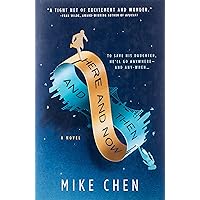
Here and Now and Then by Mike Chen (2019)

Image
My last 'sci-fi' read of the year is the story of a time-agent, a person tasked with preventing criminals from taking advantage of time travel, getting stuck in the past and his 'rescue' after 18 years. Problem is, he is emotionally torn between the family he leaves behind in the past and the family from his proper timeline he returns to. In short, it's an emotional rollercoaster painted with a veneer of sci-fi shenanigans. And that's the book's main problem.  As a family drama, the book works well enough (though I surely wouldn't say 'gripping') and is generally well-written. I just couldn't get behind the overall story, though, because the book is billed as being sci-fi - given the element of time travel - but the time-traveling merely serves as a plot device whose particulars aren't given much thought by the author. This tended to make the book almost read like advanced Young Adult material than a thought-provoking exercise in sci-fi. ...

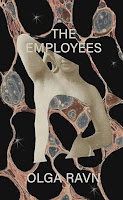
Book Review: The Employees by Olga Ravn (2022)

Image
First, a synopsis from Amazon: " The Employees  chronicles the fate of the Six-Thousand Ship. The human and humanoid crew members complain about their daily tasks in a series of staff reports and memos. When the ship takes on a number of strange objects from the planet New Discovery, the crew becomes strangely and deeply attached to them, even as tensions boil toward mutiny, especially among the humanoids."  Apparently, this book had been shortlisted for several sci-fi book awards and honestly, I can't even begin to understand why.  As stated in the book's synopsis, each chapter is a report/statement from an employee aboard the Six Thousand Ship t o a corporate investigatory board concerning the attachment of the employees to 'objects' that are taken on the ship. What the objects are exactly is never stated. There is no particular character to root for. A murder mystery is teased but never properly addressed. There is no deep philosophical exploration (much le...

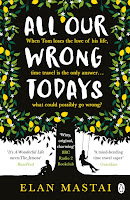
Book Review: All Our Wrong Todays by Elan Mastai (2017)

Image
This was a fun read and a real page turner for me. All Our Wrong Todays is an alternate timeline/time-travel story warped by the crushing specter of personal despair and family drama. While I see this book as not being everyone’s cup of tea, its strength lies in the fact that you simply don’t know what’s going to happen next while our anti-hero, Tom, deals with what a fuck-up he is. (This is the really the only trope the book gives service to in a genre littered with tropes.) The book has some great lines, such as, “Every invention introduces you to the accident of that invention” and this goes for people, as well. If there’s a downside to the book, it would be that too often our (anti)hero is written in an immature and crass way with too much dialogue to reflect this and his inability to truly explore the philosophical implications of his actions. Tom, the (anti)hero is not someone we could admire but I believe he reflects that dark side of ourselves that we hate to admit exists somet...

Book Review: The Loop by Ben Oliver (2009)

Image
Let me begin by letting all writers in on a little secret: The ending is everything. Read that again. That said, Ben Oliver’s The Loop left me incredibly angry, giving us one of the worst endings since the movie Sliver and casts the entirety of everything that preceded it into question. This is another one of those “I wanted to like it more than I did” books, this one about a teenage boy locked in a futuristic prison in some dystopian future. Despite immediate Hunger Games/Maze Runner vibes, I was still captivated early on by the simplicity of the plot and ease of prose. There is a lot of suspending of belief to be had, though, as you wonder just how many times someone can cheat death (which could be resolved by the book’s non-ending, if you read it that way). There are a lot of good characters but many of them seem to transform on a dime which doesn’t seem plausible, either. Add in some pseudo-zombies for good measure and you’ve got…something. On a positive note (which will becom...

Book Review: The Three Body Problem by Cixin Liu (2014)

Image
I've been wanting to read this book for some time as it's on every Booktuber's hotlist of modern first-contact, hard sci-fi. For the most part, I was not disappointed... The book begins set during China's cultural revolution which serves to highlight man's cruelty to man and the tension between science and politics. In fact, a good portion of the book - almost it's entire first half - is dedicated to driving this point home. While not a major strike against the book, it does serve notice that the book does not move along at breakneck speed and often spends vast amounts of time dedicated to particular scenes. Fortunately, the book is so beautifully written (or should I say beautifully translated save some remote juvenile-sounding passages) that I completely forgave this particular criticism. The story is vast and infused with intriguing ideas both scientific and philosophical - and I love this - which ultimately culminates in contact with an alien civilization th...

Book Review: The Mote in God's Eye by Niven & Pournelle (1974)

Image
The last book I read was such a deeply soft sci-fi book I felt like going in the opposite direction for my next novel, the hard sci-fi classic The Mote in God’s Eye . Published in 1974, this is an epic, galaxy spanning, militaristic story that finds humanity making first-contact with aliens in the year 3017 after mankind has spread through several other solar systems. I did feel like the first two chapters of the book were a bit of a drudgery but the third chapter picked up business long enough to pique my interest and propel me the rest of the way. Sure, but did I like it? This book is somewhat vexing. Well-written most of the way with an interesting-at-times but also too-familiar take on the mostly humanoid aliens, the book is occasionally ahead of its time (pocket computers, the Langston Field) while simultaneously being a product of the era it was written in (largely traditional patriarchal male/female roles and notes of feudalism, where a ‘romance’ that feels tacked on and immatur...

Book Review: Solaris by Stanislaw Lem (1961)

Image
Solaris is a classic sci-fi drama that follows the story of Kris Kelvin, a psychologist, as he arrives on a space station that is surveying the planet Solaris below. Solaris – the planet itself – appears to display signs of what might be intelligence, implying the planet is conscious. However, this intelligent consciousness is not like anything human, raising the question of why humans use themselves as the standard of consciousness for all ‘life.’ This however, is but a subplot of the book.   The book’s main focus is upon the humans studying it. Shortly after Dr. Kelvin arrives on the station, he is soon plagued by ‘visitors’ of which I will say nothing more other than said ‘visitors’ are implied to be explorations of the human psyche by the planet for reasons that are not readily apparent. The book’s strength lies in how Dr. Kelvin rationally, successfully – and emotionally, unsuccessfully – deals with the station’s ‘visitors.’ This is what makes the book more about the human psy...